Monday, October 31, 2011

Pumpkin murders!!!!

====
+

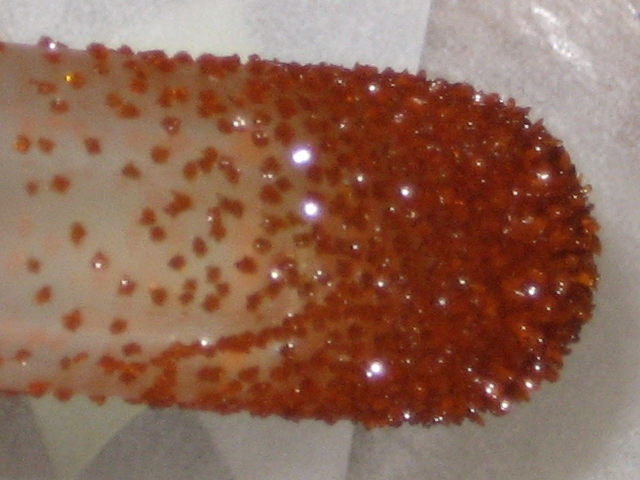
Well that is what basically what happened. See for halloween Mr. Ludwig asked us to bring pumpkins. What a surprise we were in for! We walk in and he asks us to take our pumpkins and stab them! well....at least cut out the top and a face.

We needed a good steak/carving knife and a spoon. Your hand is also a must and then you dug in! You cut the top of the pumpkin (where the stem is)

at a angle, sorta twoard the middle of the the stem (almost a 45* angle) so the lid will not fall straight through. You then clean your pumpkin. I used a simple metal serving spoon to scrap out the seeds and the meat of the pumpkin (which are fiberous strands also known as the "brains" of the pumpkin). It really didnt need to be completely clean (which is a good thing I think).

We then carved out a face. The standard traingle nose, eyes, and the two tooth smile were my creation. Mr. Ludwig inspected the pumpkin


Saturday, October 15, 2011

seperation

I was not here for the separation lab. One day I had a Cross Country meet and the next I was in the other room muttering expletives with a splitting migraine. I can however describe to you what my classmates did. I give all credit to Leigh and Timmy for somewhat describing what happened. And I can describe each separation techniques.

Separation of different matters are done by several different techniques. Such as Distillation,
Sublimation, Evaporation, and Filtration.
Different Techniques used:

Distillation: Is based off of the boiling points of two different liquids. Liquid A has a high boiling point compared to liquid B and thus liquid b is boiled completely out of liquid A thus leaving liquid A as just Liquid A in a pure form as it had its impurities boiled out of it.  Distilled water found in the back of Mr. Ludwig's room is a good example.

Sublimation: Process of a solid turning into a gas, without passing through a liquid phase. My best example I can actually use for I have seen in a part of New Mexico. It was so hot there, that once my uncle gave me a Popsicle, I forgot about it, and it was gone. There was no liquid stains or anything. Kinda creepy for my 7 year old mind.


Evaporation: Well this is a common one. We see this all the time in the state of Colorado. This is the state of a liquid transforming into a gas due to heat. During the summer, if you're going to a lake or the pool you can see the gas waves the water is creating hovering over the body of water, due to the top layer of water being evaporated due to the extreme heat.

Filtration: This reminds me of a coffee maker. You place the coffee filter with the ground coffee beans and pour the water in. During the system the water creates the coffee by passing over the ground coffee beans. But the grind stays put because it is too big to pass through he filter. Yet all filters are not the same. Some allow particles to pass through. Just depends on the pore size of the filter. 

I did a experiment once with Filtration with a coffee maker (it was actually a horrible joke on a friend) I placed lemon rind in with the coffee beans and let it make the coffee. The rind and the beans stayed in the filter but the flavor particles passed through. Thus making a effectively  good example (horrible joke) of filtration.


Tuesday, October 11, 2011

Positions of Electrons/energy levels/ atomics structure

Well all atoms have sub levels. Sub level 4,3,2, and 1. They reside in the blocks .

1s
2s, 2p
3s, 3p, 3d
4s, 4p, 4d, 4f

Electrons that can be held:
  • s= 2
  • p= 6
  • d= 10
  • f=14
If you look at the periodic table you can see where this all comes in. Period one and period two are all in the s-block and thus if they have a s level for electrons they can all hold only 2.  And it goes on and on to the p block, the d block, and the f block. Energy is more concentrated toward the outer rings of the atom electron shells and as the energy travels inwards , energy is less predominate. 


Here is the periodic table so you can understand the energy levels better.


Now here is an example Mr. Ludwig did with us today.

Say you take helium for example. It has one electron. It only fills up half of a s level. dubbed s exponet 1. Thus is can have more energy. Now take the noble gas Neon. It has ten electrons. SO it fills up the s level on the first shell, the s level on the second shell and fills the p level completely. Noble gases dont react due to all the electrons fitting perfectly into their respective levels/shells.

Monday, October 10, 2011

Light, Light waves, taste the rainbow! (spectrum post)


In this blog/lab we experimented with light waves. We took a special (almost like those specail kids toys that made those funky shapes) cylinderical tube and view the waved emitted from the light. Since the tube had a lens on it that only showed the strongest wave, we had a lot of surprises. Neon (to me anyways) was a maroonish red color, while infared was well red. Now back to the spectrum colors.

The most dangerous believe it or not is the violet rays. UVB rays cause damage to the skin which in turns cause skin cancer and sun damage (most common is sunburn). Infrared light is used as a way to see body head. X-rays are used to see through a human/animal body and bounced back when it hits our bones. Microwaves create heat that warm up/cook food. Radio and Tv waves are for our entertainment. Gamma rays are used for medical uses as far as I know. you would think the red would be the most dangerous (since we associate red with bad/danger) but in fact they are almost the least harmful.

Now the light waves start off at a slow,wide, sedate pace which generates very little heat and are not dangerous to the human body. As you go up the scale the waves begin to shorten and speed up. Depending on the speed, the waves can become dangerous to the epidermal layer to our bodies. The faster the wave the more energy (heat) is given off, or radiation.

 the energy of a molecule can also change via rotational, vibrational, and vibronic (combined vibrational and electronic) transitions. These energy transitions often lead to closely-spaced groups of many different spectral lines, known as spectral bands. Unresolved band spectra may appear as a spectral continuum link to above

Which also creates the different light waves. Continuous, absorption, and emission.

Continuous: Continuous light is when you can see the whole color spectrum in the light. When I was able to look through the "magic" tube I was able to see the whole rainbow spectrum through the glass.  Hence the taste the rainbow title. 

Absorption: Is almost like continuous, you can see specific colors to the range but that is all. sorta spotty vision. continuous red for example then only a little of yellow and then it stops.

Emission: was horrible! now more colors. It only showed BARS of certain colors. I belieave this was neon in the lab and it only showed bars of red for a little period before they  didn't continue.